30 July 2013

Record heat hits rapidly melting Arctic as boreal forest burns at an unprecedented rate

by David Spratt

This image from North Pole Environmental Observatory's live cam has gone viral. The meltwater lake started forming July 13, following two weeks of warm weather in the high Arctic.

It's one of many arresting images and disturbing reports tumbling out of a rapidly melting Arctic this northern summer as researchers warn that the region’s mighty boreal forests have been burning at rates unprecedented in the past 10,000 years, and that Greenland is at risk of more rapid disintegration, pushing a quicker sea level rise.

15 July 2013

Tony Abbott's hot air on soil carbon plan : reliance on soil carbon to "offset" greenhouse emissions "scientifically flawed"

by David Spratt

One-sided reliance on soil carbon policies –  which are at the heart of the Liberal-National Party's "direct action" climate plan to reducing Australia's greenhouse emissions – is "scientifically flawed" according to a group of seven Australian and UK climate researchers including Climate Commissioner Prof. Will Steffen, writing in Nature Climate Change.

The scientists say that while the land carbon buffer can provide "a valuable, cost-effective, short-term service in helping to reduce atmospheric carbon dioxide", in the bigger picture – including the environmental limits to soil carbon and the huge quantity of new emissions each year – considering carbon storage on land "as a means to 'offset' CO2 emissions from burning fossil fuels… is scientifically flawed."

11 July 2013

Arctic melt hits food security in bitter taste of life on a hotter planet

by David Spratt, first published in RenewEconomy

Arctic melt has pushed the Jet Stream into
a more meandering, S-shape pattern, dragging
down and stalling cold and wet conditions
over Europe
iIn the UK and Ireland,  wet summer and autumn followed by a cold winter and spring have hit wheat yields, potato production and cattle feed, a foretaste of how climate change can affect food security, even in the developed economies.

And the culprit in this drama is rapid Arctic melting, which has destabilised the Jet Stream and brought extreme weather – unusual cold, heavy snowfall, record rain and hot spells — to much of northern Europe and North America, and record heat to the Arctic. Following Superstorm Sandy’s battering of the US north-east coast in 2012, flooding in June across central Europe was the worst in 400 years.

Rapid Arctic melting – sea-ice volume in September 2012 was down by four-fifths compared to the summer average 30 years ago – has helped change the Jet Stream, the river of high altitude air that works to separates Arctic weather from that of northern Europe, Russia and Canada, and which governs much northern hemisphere weather.

10 July 2013

Pine Island glacier loss must force another look at sea-level forecasts as giant iceberg is spawned

A crack has opened across the full width of the
PIG ice shelf, spawning a new berg
Update 10 July 2013: Pine Island spawns giant new iceberg as fissure extends full width of glacier

BBC New reports that, as anticipated for two years (story below), "Pine Island Glacier (PIG), the longest and fastest flowing glacier in the Antarctic, has spawned a huge iceberg... The block measures about 720 square kilometres in area, roughly eight times the size of Manhattan Island in New York."
     Confirmation that a fissure had spread across the full width of the glacier was confirmed on 8 July with images obtained from the German TerraSAR-X satellite (pictured at right).  The fissure was first observed in October 2011 (image below).

09 July 2013

Tony Abbott's climate policy is a deniers' figleaf

Abbott's direct inaction policy would condemn Australia to even worse heatwaves, extreme floods and bushfires 

by Alexander White

Australia's opposition leader Tony Abbott
Tony Abbott. Photograph: Stefan Postles/Getty Images
Tony Abbott is the alternative prime minister of Australia, and later this year he will face an election presenting a climate change policy that is frankly insulting and potentially dangerous.

The Coalition's climate change policy amounts to a bullet point in a pamphlet – the "Real Solutions for Australians" plan – number 10 of 12 such bullet points. It reads:
"We will take direct action to reduce carbon emissions inside Australia, not overseas – and also establish a 15,000-strong Green Army to clean up the environment."
04 July 2013

Stop tailoring global warming scenarios to make them “politically palatable” says leading climate scientist

Note from CCR: Readers of this blog will be familiar with the work of Prof. Kevin Anderson, one of the world's most forthright climate scientists, including in 4 degrees hotter: an adaptation trap?, Climate Change: Going Beyond Dangerous, and Scientists call for war on climate change, but who on earth is listening?  Anderson's approach is reflected in the framing of the forthcoming Radical Emission Reduction Conference in December 2013. The conference rationale sums up our dilemma neatly: "Today, in 2013, we face an unavoidably radical future. We either continue with rising emissions and reap the radical repercussions of severe climate change, or we acknowledge that we have a choice and pursue radical emission reductions: No longer is there a non-radical option (emphasis added). Moreover, low-carbon supply technologies cannot deliver the necessary rate of emission reductions – they need to be complemented with rapid, deep and early reductions in energy consumption – the rationale for this conference."  The following interview with Anderson was first published at People and Nature. 

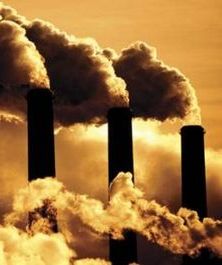
ChimniesThe reality about the greenhouse gas emissions cuts needed to avoid dangerous global warming is obscured in UK government scenarios, according to Prof. Kevin Anderson. Anderson told a Campaign Against Climate Change conference in London on 8 June that the most important measurements, of total carbon dioxide in the atmosphere, are pushed into the background and scientists are pressured to tailor their arguments to fit “politically palatable” scenarios.

09 April 2013

“Critical decade” or “lost decade”? (3)
Is the future unspeakable?

The Australian Labor government’s climate policy steps were slow in coming and incremental, when they needed to be transformative, and a likely Abbott government will be worse, so what’s important now?

by David Spratt | Third in a series | Part one | Part two

Published at ReNewEconomy on 10 April 2013 

Photo courtesy Greenpeace
As the federal Labor government and a significant period in climate policy-making in Australia very likely come to a close this year, there is an opportunity for the climate action and advocacy movement to reflect and plan together. One important chance is from 18-20 May in Kurri Kurri in the Hunter Valley of NSW, where community activists from around Australia will gather for three days of discussion under the banner Our Land, Our Water, Our Future: Beyond Coal and Gas.

08 April 2013

“Critical decade” or “lost decade”? (2)
Inside the beltway

With a victory for Tony Abbott and the Liberal–National Party coalition at Australia's federal election in September, and conservative domination of Australian parliamentary politics for the remainder of this decade both likely, what will the major parties do on climate action?

by David Spratt | Second in a series | Part one | Part three

Published at ReNewEconomy on 9 April 2013

Increasing heat content in the oceans (blue) show the
claims that global warmed has "stopped" to be fallacious.
Courtesy Skeptical Science.
LIBERAL–NATIONAL PARTY COALITION (LNP): The federal LNP’s plans are clear: up to $70 billion cuts in government spending, public sectors austerity and up to 35,000 public sector job losses. Think David Cameron in the UK or Campbell Newman in Queensland. Big business will get a free run, the mining profits tax will go, and wealth will be transferred to the top end of town. All in the name of reducing the size of government and reducing regulation to expand the private sector because more, bigger and more profitable markets are our saviour.

07 April 2013

“Critical decade” or “lost decade”? (1)
The conservative tide

Political parties which vacillate between denial and delay on climate action are set to dominate Australian politics for the remainder of this decade, so how should we respond?

by David Spratt | First in a series | Part two | Part three

Published at ReNewEconomy on 8 April 2013 

The global average temperature is now higher than
at any time during the Holocene, the period of
human civilisation
Australian Climate Commission reports in recent months (here and here) emphasise that this is “the critical decade”. Yet the bookies say there is an 85-90% probability that the Gillard Labor government will lose this year’s federal election – and by a big margin – heralding an era of conservative domination of Australian politics at national and State levels.

Just before Easter, ALP stalwart and former ACTU secretary Bill Kelty wrote that: "The politics of the next few months is no longer about the result of the next election" (emphasis added). Everybody knows Labor is lost, baring Kevin Rudd rising from the dead and at least giving the conservatives a shake.

30 March 2013

Doubling down on our Faustian bargain

Intro note: NASA's James Hansen and colleagues Pushker Kharecha and Makiko Sato have a new paper, "Climate forcing growth rates: doubling down on our Faustian bargain," in the current issue of Environmental Research Letters. They have also summarised their findings in an overview out today, and reproduced below. Main points include:
  • Associated with human greenhouse gas production is the release of fine particle known as aerosols which have a temporary cooling effect (they last in the atmosphere less than a week).
  • Aerosol cooling probably reduced global warming "by about half over the past century". In the paper Hansen et al estimate the temporary cooling "aerosol forcing -1.6 ± 0.3 watts per sq. m.". This is around 1.2 degrees Celsius. That is, without the aerosols associated with burning fossil fuels, the planetary would be more than a degree warmer!
  • The amount is uncertain because global aerosols and their effect on clouds are not measured accurately. Overcoming this gap in knowledge is urgent.
  • To prevent catastrophic global warming human greenhouse gas emission must cease, but this will also end the aerosol cooling effect and the full heating effect of our "Faustian bargain" will be revealed.

13 March 2013

Ending the stupid technology innovation vs. deployment fight once and for all

Human beings are pretty damn clever. We have adapted and invented our way out of some extremely grim situations. And we can do the same in the face of climate change! The ideas and innovations necessary to ensure our security, and the security of future generations, are within our power. What’s needed is a smooth, effective conveyor belt to carry those ideas and innovations from our heads, into the world, and up to sufficient scale.

Unfortunately, as things now stand, that conveyor belt is rusty and full of gaps. Clever ideas get stuck in our heads, or fail to make it across the “valley of death” between labs and markets, or fail to take hold and grow in those markets. We call these gaps “market failures,” but that is a misleadingly passive construction. The conveyor belt is not something that exists in Platonic market space, a priori, that we merely need to uncover. It is something we must build, consciously, using markets among other tools.

07 March 2013

Putting carbon back into the ground – the way nature does it

by Adam D. Sacks
Global climate change and land degradation have to be put on a war footing internationally - meaning that all nations need to pull together and treat this threat as we would a war. . . . Only through uniting and diverting all the resources required to deal with climate change and land degradation can we avert unimaginable tragedy. We have all the money we need.  All we cannot buy is time. – Allan Savory
I've been a climate activist since the millennium turned, twelve long years ago.  Like so many others I've rallied, marched, petitioned, organized, lectured, blogged, fumed, despaired, studied, argued and hoped.  Now, sadly, it seems that we have to come to terms with a painful reality: Our fight against global warming has not worked. 

25 February 2013

Apocalypse Not: The Oscars, The Media And The Myth of ‘Constant Repetition of Doomsday Messages’ on Climate

By Joe Romm, via Climate Progress

The two greatest myths about global warming communications are
1) constant repetition of doomsday messages has been a major, ongoing strategy and
2) that strategy doesn’t work and indeed is actually counterproductive!

These myths are so deeply ingrained in the environmental and progressive political community that when we finally had a serious shot at a climate bill, the powers that be — led by team Obama! — decided not to focus on the threat posed by climate change in any serious fashion in their $200 million communications effort (see “Can you solve global warming without talking about global warming?“).

20 February 2013

New study reveals Labor will hand $2.3–5.4 billion profit bonanza to Australia's dirtiest power stations from carbon price compensation

by David Spratt

The warnings were clear and now its happened: bending over backwards with carbon tax compensation to appease Australia's dirtiest electricity generators, the Gillard government has handed big coal billions in windfall profits, whilst consumers are effectively paying twice for the carbon price.

Anybody with any sense — from Professor Ross Garnaut to The Greens — warned two years ago that Labor's carbon tax package was far too generous in compensating Australia's dirtiest, brown-coal-fired power stations in Victoria and that, rather than providing reasons for them to be phased out, the package would perversely provides financial incentives to keep generating dirty power even longer.

And now the damning evidence is in.

19 February 2013

To fear or not to fear...

.. as Australia’s contribution to climate change on track to double in next decade or so thanks to fossil fuel exports


Note: As a followup to the post of my contribution to this year's Melbourne Sustainability Festival Great Debate, here is the contribution by Guy Pearse. – David
by Guy Pearse

OK, some personal questions to start… Who’s got a BMI of over 30? What about a tattoo completely covering just one arm – come on I know you’re out there... People are a bit shy... Let’s try an easier one… Who’s got a Facebook account, or has tweeted or felt the need to follow someone who does. Congratulations – you’re part of rapid social change. Not so long ago, very few of us would have answered ‘yes’ to any of those questions. Now, maybe you signed up to Facebook hoping to stalk your high school sweetheart; or got that tattoo fearing you might not fit in without it at the nursing home later in life. But, I’m guessing fear and optimism played little role. Yet, here we are debating which is the stronger driver of rapid social change.

16 February 2013

Fear, optimism and activism: What drives change?

It's  a fair bet that my Brightsiding series in 2012 was responsible for the topic at this year's Melbourne Sustainability Festival Great Debate held last Friday: "Fear is stronger than optimism in creating rapid social change".
      So six of us lined up, not in teams, but with clear instructions to take one side or the other and not fence-sit (more of this later). The participants were Bob Brown, Jon Dee, Fiona Sharkie, David Spratt, Guy Pearse and Tanya Ha, and the debate host was ABC TV's Bernie Hobbs.
      Given the brightsiding that still dominates the poor performance of the government and many of the big environment groups on climate action, I felt obliged to bend the stick in the opposite direction, even though the question was poorly framed. Ten minutes is hardly time to canvas the meaning of life, so this was my contribution:

11 February 2013

Effective climate communication: 140 characters at a time

Jeff Nesbitt (@jeffnesbit), the Executive Director of Climate Nexus, shows how powerful a tool Twitter can be in communicating the global warming story.
     Here's how it started. Nesbitt had tweeted:
Record snow in a warming world? The climate science is clear.bit.ly/WXOLUB
Nesbitt was challenged by a leading Christian pastor and popular southern California radio talk show, David Housholder (@LibertyHous):
@jeffnesbit Dude. Weather is complex. Climate has never been stable. Can you name a more random set of data? davidhousholder.com

10 February 2013

Do we need a Plan B for the fossil fuel industry?

by Graeme Taylor

Is their any future for the oil and coal industries without doing what they do now: burning the stuff? In Global Warming's Terrifying New Math, Bill McKibben argues that:
We have five times as much oil and coal and gas on the books as climate scientists think is safe to burn. We'd have to keep 80 percent of those reserves locked away underground to avoid that fate. Before we knew those numbers, our fate had been likely. Now, barring some massive intervention, it seems certain.

07 February 2013

Renewable energy now cheaper than new fossil fuels in Australia

Note: This wonderful story from Bloomberg New Energy Finance today can be summed up in it final para: “New wind is cheaper than building new coal and gas, but cannot compete with old assets that have already been paid off... For that reason policy support is still needed to put megawatts in the ground today and build up the skills and experience to de-carbonise the energy system in the long-term.”
As Giles Parkinson notes today in RenewEconomy: "The analysis by BNEF is significant. Australia relies more on coal than nearly any other industrialised country, but it also has some of the world’s best renewables resources, which it has been slow to exploit. But is this likely to prompt a review of the Coalition’s energy policies – which are based on the premise that renewable energy is expensive and unreliable? Don’t bet on it."

Australia wind beats new coal in the world’s second-largest coal exporter

[Bloomberg, 7 February 2013]: Sydney, 7 February 2013 – Unsubsidised renewable energy is now cheaper than electricity from new-build coal- and gas-fired power stations in Australia, according to new analysis from research firm Bloomberg New Energy Finance. 


05 February 2013

Dependence on coal a bad strategy with shift to renewables unstoppable

By Richard Denniss, via The Conversation

Last week, Greenpeace released a report calling for a halt to Australia’s burgeoning coal exports and pointing to the catastrophic climate impacts they would cause.
      In response, Mitch Hooke, chief executive of the Minerals Council of Australia, took a standard industry line: “the proposal to stop Australian coal exports won’t stop global coal use – it will just send Australian jobs offshore and deprive state and federal governments of billions in revenue”.
     Arguments that the strength of the Australian economy is heavily dependent on digging up and shipping out as much coal as possible, as quickly as possible, are common. Of course, they also imply that economic arguments trump any concerns about contributions to climate change.